
Loading...
Serving Santa Rosa, CA and surrounding areas. (707) 867-4942
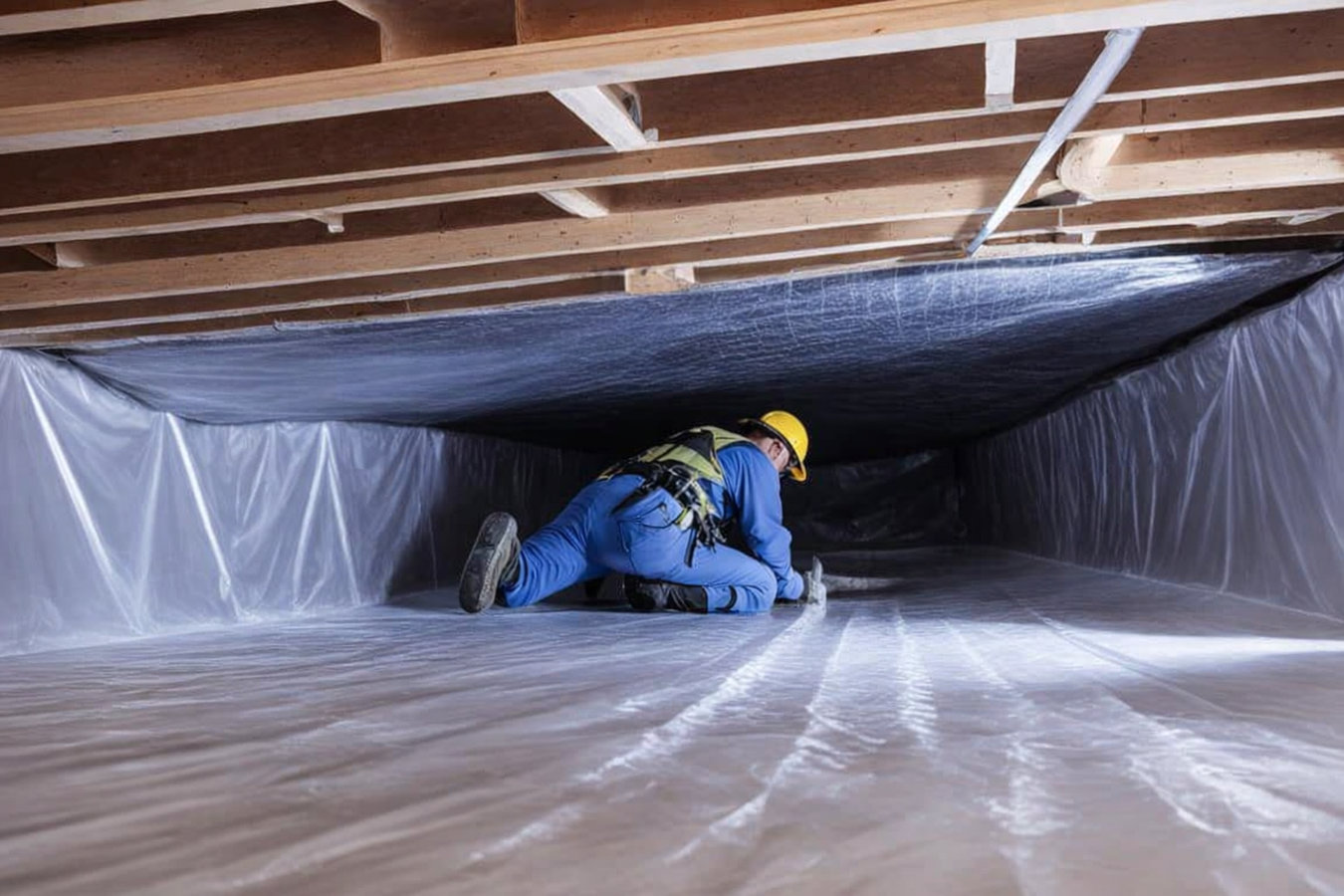
Santa Rosa's long rainy season sends moisture into crawl spaces every winter - we install a proper vapor barrier so your floors, framing, and air quality stay protected year after year.
Vapor barrier installation in Santa Rosa means rolling out and sealing heavy-duty plastic sheeting across the floor and up the foundation walls of your crawl space to block ground moisture from rising into your home - most single-family homes are completed in one full day, and results are noticeable within days.
Most Santa Rosa homeowners do not spend much time thinking about what is under their floors - until they notice a smell that gets worse every November, heating bills that creep up each winter, or floors that feel cold and soft in spots. In most cases, the problem traces back to ground moisture moving up through an unprotected crawl space. Water vapor rises from bare dirt, gets trapped in the air below your floors, and works its way into your insulation, subfloor, and framing. A properly installed vapor barrier stops that cycle before it does lasting damage. Homeowners who want to address both moisture and thermal performance at once often pair vapor barrier work with attic air sealing so the whole home envelope is handled in a single project.
The EPA's guidance on moisture control and indoor air quality confirms that moisture rising from crawl spaces is one of the primary drivers of musty odors and poor indoor air - you can read more at epa.gov. For Santa Rosa homes with bare dirt crawl spaces, professional installation is the most reliable way to solve the problem correctly the first time.
If a damp, earthy odor shows up in your home each year when the first rains arrive in late October or November, the crawl space is almost certainly the source. Santa Rosa's rainy season runs from November through April, and unprotected crawl spaces turn into moisture traps during those months. Many homeowners learn to expect the smell - but it is a sign of a fixable problem, not just the way older homes are.
Floors that feel noticeably cold underfoot during rainy season, or spots that feel slightly springy when you walk on them, suggest moisture is already affecting the subfloor or insulation below. This is especially common in Santa Rosa homes built before the 1990s in neighborhoods where crawl space moisture protection was rarely included at time of construction.
If you or a plumber has looked into the crawl space and seen water droplets on pipes, dark staining on wood beams, or white powdery deposits on the foundation walls, those are visible signs of ongoing moisture exposure. You do not need to be an expert to recognize these - they are visible to anyone with a flashlight and a few minutes to look around.
When moisture gets into crawl space insulation, that insulation stops working - which means your heating system runs longer to keep the house warm. If your PG&E bills have increased in recent winters without a change in your habits, a damp crawl space may be part of the reason. This is one of the less obvious signs but one of the most common in Santa Rosa homes with unprotected crawl spaces.
We install vapor barriers in crawl spaces throughout Santa Rosa and Sonoma County, and every job follows the same process - a physical inspection first, a written estimate with no surprises, and an installation that covers every inch of the floor with properly overlapped and taped seams. We use heavy-duty plastic sheeting thick enough to hold up to the occasional plumber or inspector crawling through, and we secure the edges to the foundation walls so the barrier stays in place over the years. For homes where the existing barrier has torn or shifted, we remove the old material before putting down a new one - not just layer on top of what is already failing. Many homeowners who do this work as part of a broader comfort upgrade also choose to add crawl space vapor barrier coverage that extends further up the foundation walls for maximum moisture protection.
We are familiar with California's energy standards as they apply to crawl space work, and we know when a project in Santa Rosa requires a permit from Sonoma County and when it does not. If your project is part of a renovation that triggers those requirements, we handle the permit process on your behalf. Building Science Corporation's research on crawl space moisture management - available at buildingscience.com - informs how we approach every installation, including seam overlap, wall attachment, and material selection.
Best for Santa Rosa homes with bare dirt crawl spaces that have never had any moisture protection - complete floor and wall coverage with sealed seams.
Right for homes with an existing barrier that has shifted, torn, or degraded over time - old material is removed before the new installation begins.
Suits crawl spaces accessed regularly for maintenance - thicker material resists tearing during plumbing and HVAC work without needing frequent repairs.
For homeowners who want to address both moisture control and thermal performance in one visit - vapor barrier and crawl space insulation installed together.
Santa Rosa gets about 30 inches of rain per year, nearly all of it concentrated between November and April. That is not a light rainy season - it is months of steady ground saturation. Sonoma County's clay-heavy soils make things worse by holding water longer than sandy soil would, so the ground under your crawl space can stay wet well into spring even after the rain stops. Much of Santa Rosa's housing stock was built between the 1950s and the 1980s, a period when vapor barriers were not standard practice in California. In neighborhoods like Rincon Valley, Coffey Park, and older parts of southwest Santa Rosa, many homes have never had anything installed under them. Homeowners across the broader service area - including those in Sebastopol and Sonoma - face the same combination of older housing stock and wet winter conditions.
The 2017 Tubbs Fire raised the bar for homes that were fully rebuilt - those homes were constructed to current California building codes, which require better moisture management. But homes in the surrounding areas that were repaired rather than rebuilt may still have old or missing vapor barriers underneath. California's energy standards apply to crawl space work done as part of permitted renovations, which means a contractor familiar with Sonoma County requirements can protect you from having to redo work later. The U.S. Department of Energy's guidance on home moisture control is available at energy.gov, and it supports the same approach we follow on every Santa Rosa job.
We will ask about your home's age, whether you have noticed any moisture issues, and whether anyone has been under the house recently. We reply within one business day and schedule a site visit that works for you.
We physically access your crawl space and spend 20 to 40 minutes looking at the size, condition of any existing plastic, whether there is standing water or visible mold, and how easy the space is to work in. You get a written estimate that explains what we found and what we recommend.
The crew removes any old or damaged plastic, lays the new barrier across the entire floor in overlapping sections, tapes every seam flat, and attaches the material to the foundation walls. Most Santa Rosa homes are done in one full day - you can be home the entire time.
Before we leave, we walk you through the finished job - photos or a look with a flashlight - and answer any questions. No drying time needed; the barrier works immediately. If a permit was required, we schedule the Sonoma County inspection and handle it on your behalf.
We will come out, look under your house, and give you a straight answer on what it needs - no pressure and no obligation.
(707) 867-4942We never quote a vapor barrier job without physically accessing the crawl space first. The size, clearance, existing material, and condition all affect the price - and you deserve an accurate number before you commit, not a figure pulled from a phone call.
We have worked on homes throughout Santa Rosa, including in areas affected by the 2017 Tubbs Fire. We know how to assess homes where crawl space work may have been done hastily during a rebuild - and we know the difference between a compliant installation and one that looks right but will not hold up through a wet Sonoma County winter.
We stay current on Sonoma County permit requirements. If your project needs a permit, we handle the paperwork and the Sonoma County inspection on your behalf. Every job is documented so you have a clear record of the work when it is done.
If your crawl space needs a standard vapor barrier, that is what we recommend. We do not quote full encapsulation for jobs that a well-installed barrier can handle. Many Santa Rosa homeowners have been told they need more work than they actually do - we give you a straight assessment of what is under your home and what it actually needs.
Every vapor barrier job we complete in Santa Rosa gets a finish walkthrough before we leave - you see exactly what was installed and how, and you have a record of the work that matters if you ever sell your home or pull a permit for a future renovation.
Air sealing for the attic floor and penetrations - complements vapor barrier work by addressing the other major source of heat loss and moisture movement in Santa Rosa homes.
Learn MoreTargeted crawl space vapor barrier coverage with full floor and foundation wall protection - the focused solution for homes where the crawl space is the primary moisture concern.
Learn MoreThe rainy season starts in November - call us now for a free estimate and get your vapor barrier installed before the first storms arrive.